
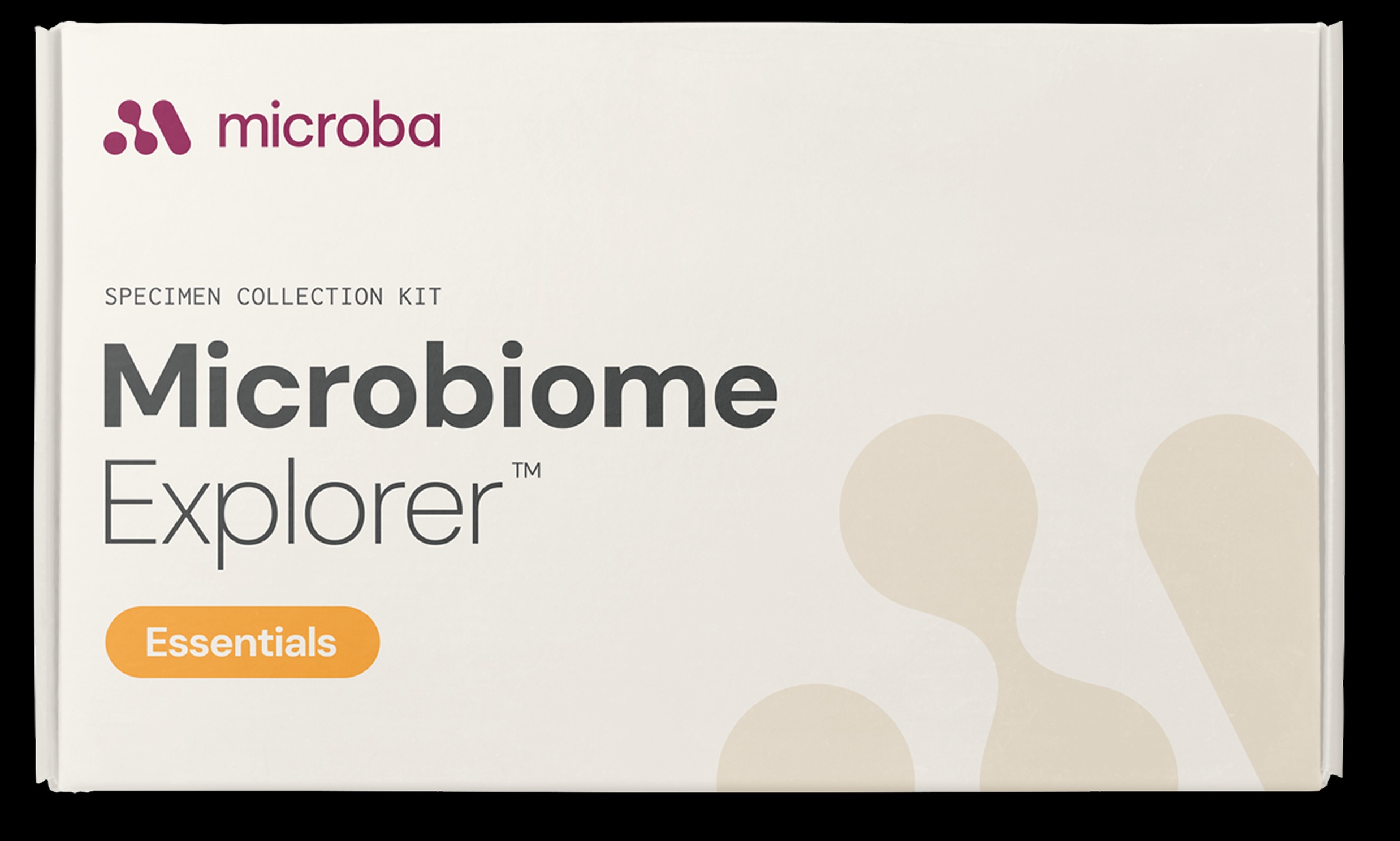
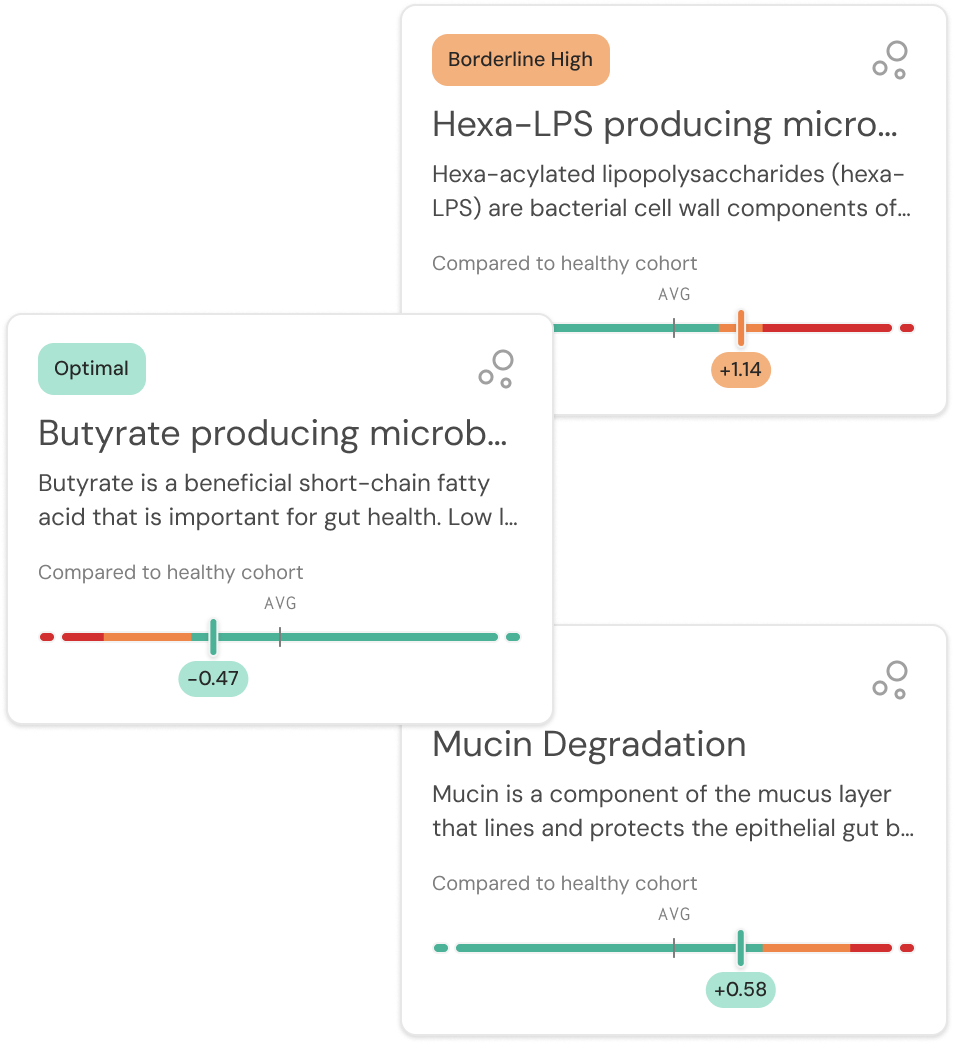
Uncover how the microbiome impacts overall health using metagenomics technology. Identify not just which microbes are present, but what they’re doing, revealing functional insights that can help your practitioner guide your care.
We are delighted to partner with Microba, providing the Essentials stool microbiome test, which translates metagenomic-driven gut microbiome results for over 28,000* microbial species and their function, together with the latest research2 to provide healthcare professionals insight into how their patients’ microbiome may be influencing their health.
The Microbiome Explorer™ test is intended for adults 18 years or older only (comparative parameters are currently not available for children).
The Microbiome Explorer™ range is only available for purchase in New Zealand through the Auckland Gut Clinic.
*Can report on over 28,000 species although a typical sample will contain between 110 – 244 species.
As our understanding of the role of the gut microbiome in human health develops, so too has the technology to evaluate it.
While growing bacteria in petri dishes is still the stuff of school biology labs, that’s almost the extent of the usefulness of stool culture tests outside of determining what antibiotics you need to treat them.
We’ve evolved from culture, through PCR (polymerase chain reaction), MALDI-tof, 16S rRNA gene sequencing and now “shotgun” metagenomics. While 16S rRNA sequencing targets a specific genetic marker to identify only bacterial – accurate to genus (family) level – shotgun metagenomics sequences all DNA in a sample, capturing bacteria, fungi, viruses, and the functional genes they carry and reports at a species level.
Thus you can not only see everything* that’s there, but the analysis of key bacterial genes, means we get data on not only “who” they are, but what they can do!
NOW, you can learn not only your unique gut microbiome, but how it might be affecting your health, and how you can achieve a better balance between desirable and less desirable microorganisms in your gut. From a smear of your poop.
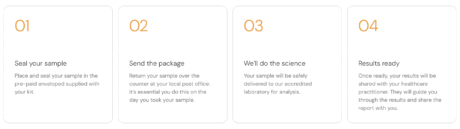
Price includes shipping (we’ll send you the kit, and a return courier bag), and the lab fee to run your sample. An appointment with one of our naturopaths is required to discuss your results. Results typically take about 6 weeks from the day we receive your test.
Samples must be returned within 6 months from date of order and within the test kit expiry date. Administration fees apply to claims for refunds of non-collected samples.
Any test samples received more than 6 months after issue may incur additional fees before being sent for analysis.
Testing, Testing, One, Two…
Having access to cutting-edge microbiome testing that provides a detailed snapshot of your entire microbiome is a game-changer. This is because it allows us to combine our experience with information about your unique microbiome to create a personalised treatment plan to help you improve your digestive health.
The Microbiome Explorer™ test can illuminate which bacterial species are living in your gut, and how they may be contributing to your symptoms, allowing you to take control of your digestive issues and improve your overall well being. Speak to us about exploring your microbiome to resolve bloating, constipation and other gut symptoms for better health, today!
To read more about the science of stool testing, check out the resources on the website of the lab that runs your sample, here
Or, you simply want to determine if your gut microbiome is in a healthy balance.
The Microbiome Explorer™ test requires a small sample of your faeces, collected onto a swab, which preserves the microbial genes.
What Does the Test Measure?
Metagenomic-driven research insights: Personalised insights providing scientifically graded statements on the evidence for diet and lifestyle interventions as well as probiotic, prebiotic, nutrient and polyphenol supplementation2
Microbiome community insights: Metagenomic identification of 28,000+ microbial species* including including bacteria, archaea and eukaryotes (fungi and protist parasites)^2
Microbiome diversity and relative abundance of the microbial community
Gut microbiome impact on health categories: Intestinal inflammation, intestinal barrier, detox/retox, systemic inflammation, motility and digestive secretions2
Presence and relative abundance of bacterial species within the following genera: Agathobacter, Akkermansia, Bifidobacterium, Bilophila, Citrobacter, Desulfovibrio, Eggerthella, Enterobacter, Escherichia, Faecalibacterium, Klebsiella, Lactobacillus, Oxalobacter, Porphyromonas, Prevotella, Roseburia, Ruminococcus, Streptococcus and more2
Production of microbial markers: Butyrate, acetate, propionate, 3-indolepropionic acid (IPA), hexa-acylated lipopolysaccharide (hexa-LPS), trimethylamine (TMA), hydrogen sulphide, branched-chain amino acids (BCAA), B. fragilis toxin, methane, beta-glucuronidase 2
Emerging markers: Histamine, ammonia (urease), gamma-aminobutyric acid (GABA) production, GABA consumption, vitamin K, lactate, human DNA2
Microbiome consumption of: Mucin, oxalate 2
Whole microbiome profiling of fungi species: Candida genus and Saccharomyces genus and more2
Whole microbiome profiling of parasites/protists: Parasite detection of Blastocystis subtypes 1-9 and other protist parasites2
As featured in the Australian media

Add to Cart
| Weight | 0.25 kg |
|---|---|
| Dimensions | 15 × 4 × 26 cm |
You must be logged in to post a review.



Reviews
There are no reviews yet.