
We've changed the way we work. Dr Sharon is available for consultation via tele-health and Alicia is available in her private clinic & online. Dismiss

$219.00 – $793.00Price range: $219.00 through $793.00
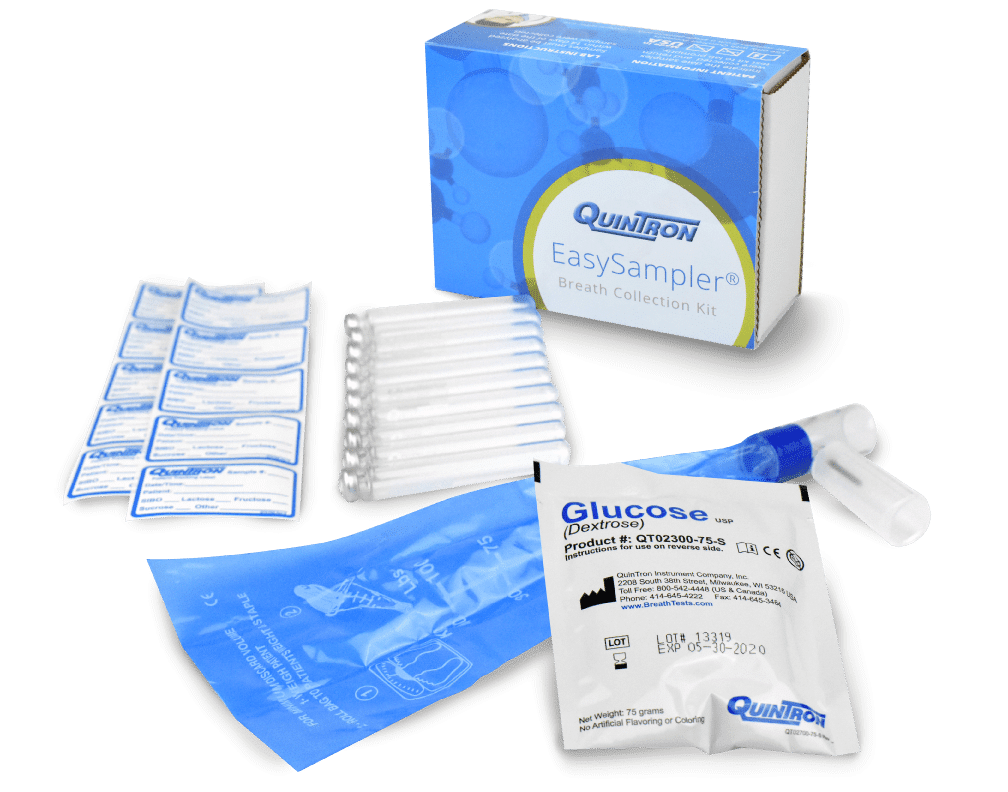
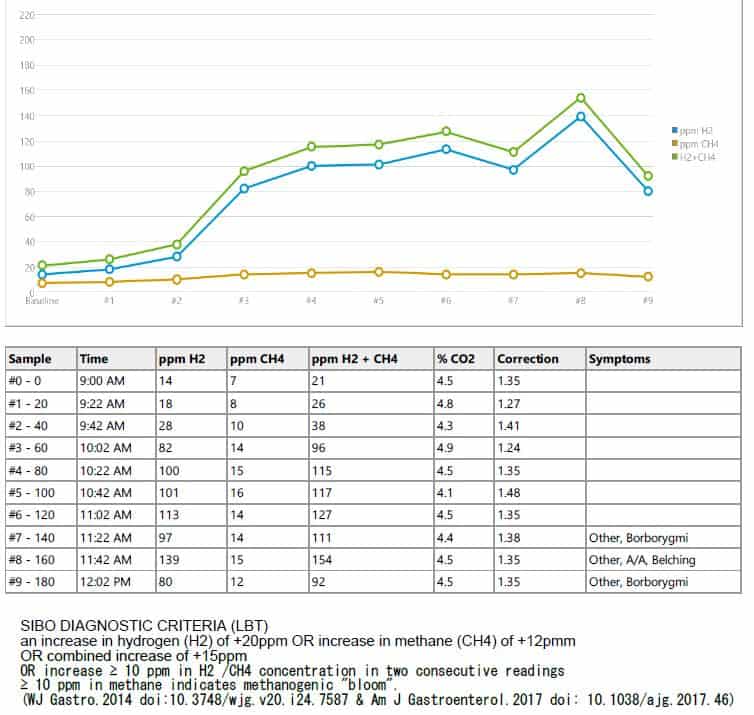
Results of a hydrogen-methane breath test provides information regarding the possible role of bacterial gases in your digestive symptoms. Tests can be conducted in the privacy of your home, or in our Auckland clinic. Diagnose problems related to lactose, fructose, sucrose, sorbitol and mannitol. Following a preparatory diet is required.
NOTE: Lactulose and Lactose are used to test different things. Please check you are ordering the correct test.
Test for SIBO, fructose intolerance and/or lactose malabsorption or other FODMAPs (such as sorbitol and mannitol) by collecting samples of your breath!
If testing for lactose intolerance or fructose malabsorption, current breath testing guidelines recommend a lactulose (+/- glucose) challenge be conducted before the lactose or fructose result can be accurately interpreted.
Written instructions for the breath test, including the preparation diet, are here. In brief, you will follow these steps:
The current recommended strategy for determining the role of bacterial aberrations in the small bowel, is to conduct 3 separate breath tests. These involve and oral challenge with lactulose, glucose and fructose on separate occasions, as each sugar gives different information. Additional sugars or polyols can be tested as well. Discuss with your health practitioner if these might be suitable for you.
Each substrate is tested on different days, with at least 2 days between. You have to follow the same preparation diet for each test.
You can book to do the breath test in our Auckland clinic in Windsor Park, North Shore, or, using a special kit you can collect breath samples in the convenience of your own home. The test is also suitable for children, as long as they can blow into a bag following instruction to do so. Please scroll down to the video for a demonstration on how this is done.
In-clinic tests are run on weekdays. You will need to arrive at the clinic between 08.30am and 09.30am on the test day, and expect to be at the clinic for at least 3 hours.
The test is collected in the morning, over about 3-hours (depending on the test sugar), after period of diet preparation.
We strongly recommend that if this is your first hydrogen-methane breath test for digestive problems, you should complete the “gold trio” of tests. This involves 3 separate tests, with Glucose, Fructose and Lactulose – in that order. These three tests can be conducted with a “rest & diet” day in between, or this can be shortened if you follow the schedule outlined below. You can leave longer between each test if this suits your planning better
Each test takes about 3 hours, after which you can eat and drink normally until resuming the preparation diet the following day for the subsequent test.
Here is an example of how to plan your tests. Before each test you would get up at 8am (latest), go for a gentle walk.
Analysis of results from each of these three sugars provides your clinician with the most accurate information regarding bacterial metabolism in your digestive symptoms.
You will need:
Everything else is supplied in the test kit. For accurate results, it is crucial that the breath samples are collected correctly, with at least one day between each test. Please watch the videos above and read the instructions in your kit, which explains the procedure. We recommend you watch the video below to ensure you understand the collection procedures. Time intervals may change with different substrates – ensure you read the instructions that come with your kit.
Once your test has been completed, you can eat and drink normally. Package the tubes in the box they came in, place in the pre-paid courier bag provided and either phone the courier to collect or drop in to your local post shop.
If a person is easily confused, overly anxious or for some reason unable to follow instructions or unsure if you can collect the samples correctly, please contact us to book the test at our Auckland lab – an in-clinic test is the preferred option for accurate results.
Reports are typically ready within 5-7 working days of them being received at our lab. We will send them to your ordering health professional. If you have self-referred to do the test, please nominate the health professional who will review and discuss your breath test results and to develop a management plan for you. If you do not have a practitioner who is knowledgeable about breath testing, please book and initial appointment with any of our consultants.
You can read more about breath testing here.
Our testing and interpretation protocols are congruent with those outlined in the North American Breath Testing Guidelines (2017) as published in the American Journal of Gastroenterology (PMID28323273), the American College of Gastroenterology Clinical Guideline for breath testing, and have been further refined based on our own research.
Please note: Test results should be delivered in the context of a professional consultation – either in our clinic, online or we can send the results to the registered health consultant you specify.
For more information about the background and science behind the SIBO test, read here or give us a call 09 846 5566
You can also read more about SIBO here
Lactulose and Lactose are used to test different things. Please check you are ordering the correct test.
Samples must reach us within 5 days of collection (a return courier bag is provided). Results are generally completed and sent to your practitioner within 5-7 working days.
Book an in-clinic test by calling us on 09 846 5566
Increasingly, the light is shining upon the important role the digestive system and how the organisms that live there influence many aspects of health. While irritable bowel syndrome (IBS) is a common condition and you may or may not have it, understanding the role of gut bacteria in a digestive problem is now possible.
When bacteria overgrow in the small intestine, “Small Intestinal Bacterial Overgrowth” (SIBO) can occur.
Having excessive bacteria in the small intestine (which is meant to be fairly devout of bacteria), means that food may be fermented there, causing common problems such as:
Samples must be returned within 6 months from date of order and within the test kit expiry date. Administration fees apply to claims for refunds of non-collected samples.
Any test samples received more than 6 months after issue may incur additional fees before being analysed.
| Weight | 1 kg |
|---|---|
| Dimensions | 10 × 10 × 20 cm |
| Test-options | Test kit (1 Kit), Two-test combo (Kits), Three-test combo (Kits), Four-test combo (Kits), In-clinic test |
| Test-substrate-1 | Lactulose, Glucose, Fructose, Lactose (not for SIBO testing) |
| Test-substrate-2 | Glucose, Lactulose, Fructose, Lactose (not for SIBO testing), Sucrose, Sorbitol, Mannitol, None |
| Test-substrate-3 | Lactulose, Glucose, Fructose, Lactose (This is not for SIBO testing), Sucrose, Sorbitol, Mannitol, None |
| Test-substrate-4 | Glucose, Fructose, Lactose (This is not for SIBO testing), Sucrose, Sorbitol, Mannitol, None |
You must be logged in to post a review.
Stay informed: Get expert tips, free advice, updates, recipes, and special offers delivered straight to your inbox.

Sharon Erdrich (store manager) –
Sorry you found it challenging Diego. We do understand it’s a complicated process for the uninitiated, so our instructions are also on a video and we do offer in-house testing. However, most people navigate sample collection successfully. It’s always good to know the specific challenges people encounter so we can help out or update our process. I hope you got what you need for supporting your health journey.